Don’t say it was “delightful”; make us say “delightful” when we’ve read the description. –C.S. Lewis
I found this great piece of writing advice from C.S. Lewis on twitter today.(courtesy of @thatboycanteach)
I know the phrase “show don’t tell” confuses a lot of people who are new to critiquing/workshops, because all writing is telling… isn’t it?
But this is exactly what writers are talking about when they use that phrase.
This is also why, when critiquing your work, writers might tell you to remove adjectives and adverbs, or why you might hear that those two types of words are “bad writing.” It’s not that you’re never allowed to use an adjective or an adverb, but that–like Lewis says–it’s much more preferable to be terrified, than to be told something is terrifying.
Whenever you tell your reader what the characters in a story are experiencing, instead of letting your reader have an experience alongside your characters, you miss an opportunity to invite your reader into the story. If you miss too many, eventually your reader will stop waiting for their invitation and simply leave.
IF IT HAS BEEN A VERY LONG DAY, YOU ARE ‘WEARY’. IF SOMEONE IS ACTING IN A WAY THAT MAKES YOU SUSPICIOUS, YOU ARE ‘WARY’.
ALL IN ‘DUE’ TIME, NOT ‘DO’ TIME
‘PER SE’ NOT ‘PER SAY’
THANK YOU
BREATHE – THE VERB FORM IN PRESENT TENSE
BREATH – THE NOUN FORM
THEY ARE NOT INTERCHANGEABLE
WANDER – TO WALK ABOUT AIMLESSLY
WONDER – TO THINK OF IN A DREAMLIKE AND/OR WISTFUL MANNER
THEY ARE NOT INTERCHANGEABLE (but one’s mind can wander)
DEFIANT – RESISTANT DEFINITE – CERTAIN
WANTON – DELIBERATE AND UNPROVOKED ACTION (ALSO AN ARCHAIC TERM FOR A PROMISCUOUS WOMAN)
WONTON – IT’S A DUMPLING THAT’S ALL IT IS IT’S A FUCKING DUMPLING
BAWL- TO SOB/CRY
BALL- A FUCKING BALL
YOU CANNOT “BALL” YOUR EYES OUT
AND FOR FUCK’S SAKE, IT’S NOT “SIKE”; IT’S “PSYCH”. AS IN “I PSYCHED YOU OUT”; BECAUSE YOU MOMENTARILY MADE SOMEONE BELIEVE SOMETHING THAT WASN’T TRUE.
THANK YOU.
*slams reblog*
IT’S ‘MIGHT AS WELL’. ‘MIND AS WELL’ DOES NOT MAKE GRAMMATICAL SENSE.
A SNEAK PEAK WOULD BE A MOUNTAIN ENGAGED IN ESPIONAGE
THEY ARE VERY LARGE AND WOULD FIND THIS GENERALLY DIFFICULT
THANK
(OH AND ONE OTHER THING
BULLION = PRECIOUS METAL
BOUILLON = STOCK, FROM THE FRENCH “BOUILLER,” TO BOIL)
SHUDDER:
SHUTTER:
NOT SAME NOT SAME
sleight of hand: magic tricks
slight of hand: President-Elect
I love this post so much oh my god 😂
“A MOUNTAIN ENGAGED IN ESPIONAGE” I’m losing my shit
OK, THANK YOU VERY MUCH
I COULDNT CARE LESS not I COULD CARE LESS bc couldn’t means you care so little you’ve hit rock bottom of not giving a fuck and you can’t sink any lower but could means there is room for you to care less implying you care in the first place
The other day I saw (in a best selling novel for fuck’s sake) someone say “you have a flare for the…” when they meant “flair” and I fucking PLOTZED.
I know I’ve added lots to this in prior reblogs, but I’m gonna add something again, just because.
“If you THINK xyz, then you have another THINK coming.” Thing makes no sense here. Even some of my favorite fic writers are guilty of this one.
You BARE your soul. You BEAR a weight. Very different.
You can’t ball your eyes out…but you can melon ball them….
AFFECT: The Action. For example, I punch you in the face for getting these two words mixed up.
EFFECT: The End result. For example, you crying because I punched you in the face.
MORE EXAMPLES: “The people in the city were affected greatly by the war. The effects of this included famine, widespread disease, high numbers of causalities, and a record number of civilian fatalities.”
“The dog in the room had a positive effect on every person in there. Even Alyssa, who usually hated animals, seemed to be affected by its presence, and smiled when I glanced in her direction.”
ROGUE – noun
1.a dishonest, knavish person; scoundrel.
2.a playfully mischievous person; scamp:The youngest boys are little rogues.
3.a tramp or vagabond.
ROUGE –
noun
1.any of various red cosmetics for coloring the cheeks or lips.
2.a reddish powder, chiefly ferric oxide, used for polishing metal, glass,etc.
Yes, while there’s a certain element of logic to a “Rouge Vampire” – the makeup would help disguise the deathly pallor, somehow I don’t think that’s what you meant to say!
IT’S SUBCONSCIOUS, NOT UNCONCIOUS. PEOPLE AREN’T SLEEPWALKING EVERYWHERE.
THEN, THAN, WERE & WHERE
then
T͟Hen/adverb
adverb:
then
1.at that time; at the time in question.“I was living in Cairo then"synonyms:at that time, in those days; More
2.after that; next; afterward.“she won the first and then the second game"synonyms:next, after that, afterward/afterwards, subsequently, later"she won the first and then the second game”
3.in that case; therefore.“if you do what I tell you, then there’s nothing to worry about"synonyms:in that case, that being so, it follows that"well, if that’s what he wants, then he should leave”
also; in addition.“I’m paid a generous salary, and then there’s the money I’ve made at the races"synonyms:in addition, also, besides, as well, additionally, on top of that, over and above that, moreover, furthermore, what’s more, to boot; too"and then there’s another problem”
used at the end of a sentence to emphasize an inference being drawn.“so you’re still here, then”
used to finish off a conversation.“see you in an hour, then”
than
T͟Han,T͟Hən/
conjunction & preposition
conjunction:
than; preposition:
than
1.introducing the second element in a comparison.“he was much smaller than his son”
2.used in expressions introducing an exception or contrast.“he claims not to own anything other than his home”
were
wər/
second person singular past, plural past, and past subjunctive of be.
be
bē/verb
past tense:
were
1.exist.“there are no easy answers"synonyms:exist, have being, have existence; More
2.occur; take place.“the exhibition will be in November"synonyms:occur, happen, take place, come about, arise, crop up, transpire, fall, materialize, ensue; More
3.having the state, quality, identity, nature, role, etc., specified.“Amy was 91”
4.informalsay.“when I got there, they were like “What are you doing here?””
be present.“there is a boy sitting on the step”
occupy a position in space.“the Salvation Army store was on his left"synonyms:be situated, be located, be found, be present, be set, be positioned, be placed, be installed"the bed is over there”
stay in the same place or condition.“she was here until about ten-thirty"synonyms:remain, stay, last, continue, survive, endure, persist, prevail; More
attend.“the days when she was in school”
come; go; visit.“he’s from Missouri”
cost.“the tickets were $25”
amount to.“one and one is two”
represent.“let A be a square matrix of order n”
signify.“we were everything to each other”
consist of; constitute.“the monastery was several three-story buildings”
where(h)
wer/adverb
adverb:
where
1.in or to what place or position.“where do you live?”
in what direction or respect.“where does the argument lead?”
in or from what source.“where did you read that?”
in or to what situation or condition.“just where is all this leading us?”
adverb
adverb:
where
1.at, in, or to which (used after reference to a place or situation).“I first saw him in Paris, where I lived in the early sixties”
2.the place or situation in which.“this is where I live”
in or to a place or situation in which.“sit where I can see you”
in or to any place in which; wherever.“he was free to go where he liked”
conjunction
informal unpunctuated:
where
1.that.“do you see where the men in your life are emotionally unavailable to you?”
2.whereas.“where some caregivers burn out, others become too involved”
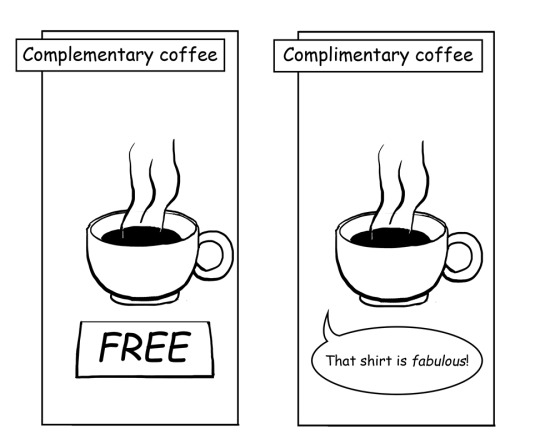
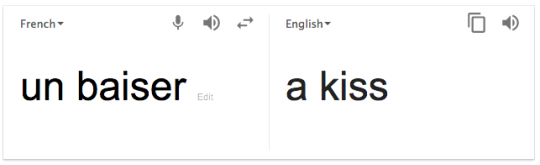
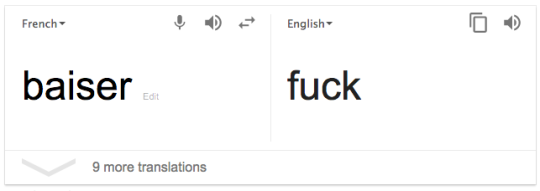
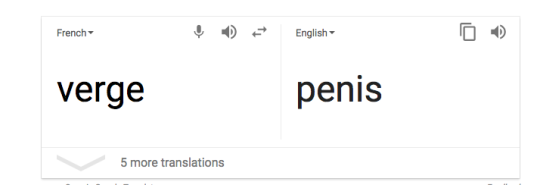
@indigopersei is the french language just always on the verge of getting someone accused of assault or..?
my friend, if only you knew
It’s a very dangerous language to learn
Here’s an interesting thing about French! Everything needs to have an article in front of it. That’s why it’s “la chat” as opposed to just “chat”. So, for instance, you could say la fille for the girl, or jeune fille for young girl, but you can’t just say fille, because that means you are calling her a sex worker in a derogatory way.
The moral of the story is, if you want to make something rude in French, just take out the article in front of it. Yes, this works for nearly. every. word.
Every year. Every year there’s that kid who forgets that you can’t translate “I am excited” to “Je suis excitée”. And every year Monsieur Jordan has to slam the brakes before that kid can finish his sentence and then tactfully ask him not to announce to the class that he is horny.
“is the french language always on the verge” oh buddy, oh pal, i am so happy to break this news to you:
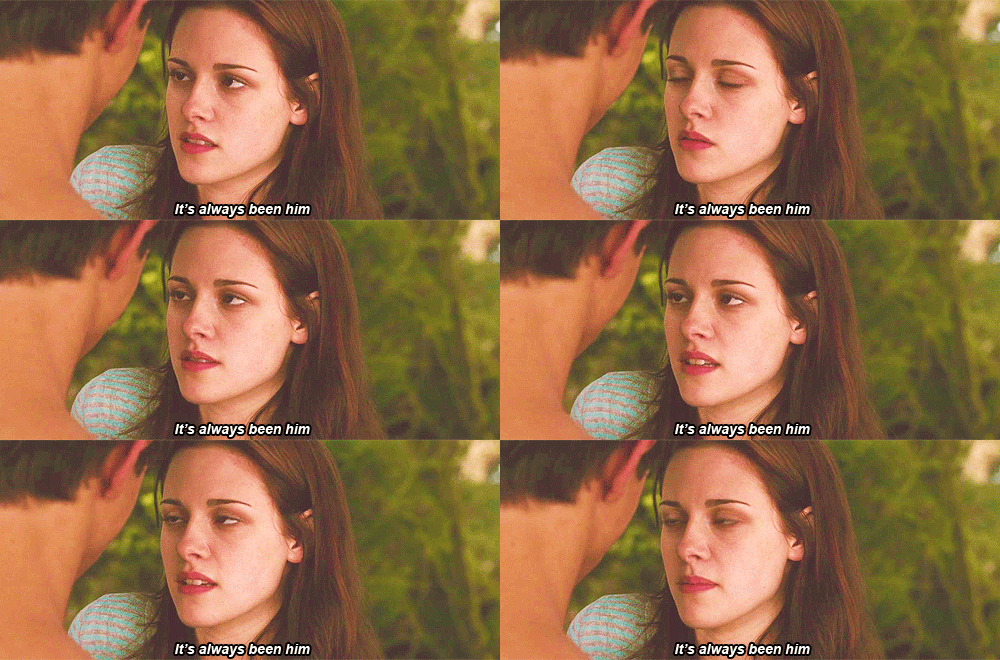
In Twilight, Bella has absolutely no qualities that make her interesting as a character. She’s shown to have very little personality, in the books or onscreen, and is only made “interesting” (a relative term here) via the inclusion of her sparkly, abusive boyfriend. It feeds into the harmful mentality of adolescent girls that you need a significant other in order to find fulfillment, particularly if he’s significantly older and likes to watch you sleep. Yikes.
Examples:
Bella is welcomed to school by a friendly, extroverted girl and given a place to sit amongst her and her friends. Despite this girl’s kindness, Bella shrugs her off as a stereotypical shallow cheerleader, and spends her time staring wistfully at the guy across the cafeteria from them. Once Edward becomes her official boyfriend, she immediately loses interest in her new friends as her life shifts its orbit to revolve completely around him.
How to avoid her:
Female characters are allowed to have lives outside of their significant others. They’re allowed to have friends, quirks, hobbies, and interests. Give them some.
The best fictional relationships are based off of characters who compliment each other, not one character who revolves around the other. Make sure your female character’s life does not centralize around her significant other.
Strong female characters don’t look down on other girls, even if they are outgoing cheerleaders. Being pasty and introverted doesn’t make you a better person, y’all – if it did, I’d be a decorated hero by now.
Give them aspirations besides getting an obsessive, much-older boyfriend. In fact, don’t give them an obsessive, much-older boyfriend at all – if you do want them to have a significant other, give them one who cares about their interests and accepts that they have lives and goals outside of them.
2. The Molly Hooper (i.e. the starry-eyed punching bag)
Who she is:
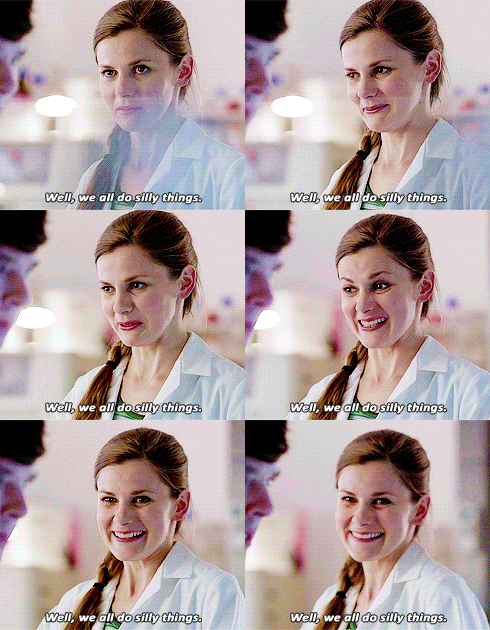
Like most things about BBC’s Sherlock, Molly was an amazing concept that went progressively downhill. I used to love her quiet tenacity and emotional intelligence, and was sure that with her strong basis as a character, she would overcome her infatuation with the titular Sherlock and find self-fulfillment. Nope!
Examples:
She remained stubbornly infatuated over the course of five years with an ambiguously gay man who, en large, treated her badly, leading to her public humiliation with zero pertinence to the plot or resolution. Moreover, her infatuation with Sherlock quickly usurped almost all of her other characteristics, leading her to an increasingly immature characterization that was difficult to relate to.
How to avoid her:
By all means, please write female characters who are quiet, kind, and unassuming (a female character does not, contrary to popular belief, need to be rambunctious, callous, or violent to be “strong”) but remember than none of these traits need to make the character a pushover. Let them stand their ground.
Similarly, attraction to men (or anyone, for that matter) does not invalidate a female character’s strength. Just be sure she values herself more than their attention.
As I said earlier, don’t be afraid to make characters who are gentle and soft-spoken, but be wary of making them “childlike,” or giving them an infantile, emotionally characterization.
My best advice for writing gentle, soft-spoken, unassuming women would actually to look to male characters in the media fitting this description; since male characters are rarely infantilized as much as women are by popular media, you’ll get a much better idea of what a well-rounded character looks like.
3. The Irene Adler (i.e. the defanged badass)
Who she is:
Yup, another one of the BBC Sherlock women, among whom only Mrs. Hudson seemed to come through with her dignity and characterization intact. In the books, Irene and Sherlock have absolutely zero romantic connotations, only bonded via Sherlock’s irritation and respect with her substantial intelligence. In the show, it’s a different story entirely.
Examples:
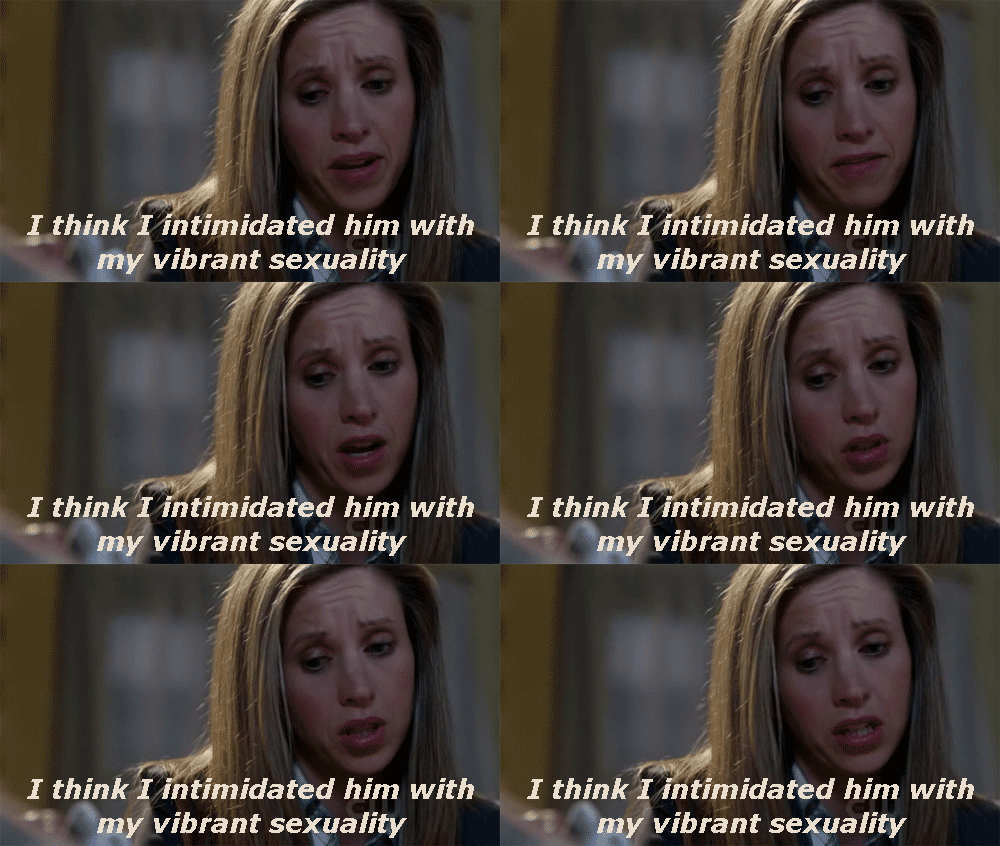
Irene is a badass character who’s turned into a teary-eyed Damsel in Distress via her uncontrollable love for the show’s male lead. It doesn’t help matters that she’s a self-proclaimed lesbian who falls in love with a man, which, unless you’re a woman who loves women yourself and writing about a character realizing she’s bi/pansexual, I would recommend against doing under any circumstances. She ends up being defeated and subsequently rescued by Sherlock – a far cry from her defeat of him in the books.
How to avoid her:
If you’re writing a badass female character, allowher to actually be badass, and allow her to actually show it throughout your work as opposed to just hearing other characters say it. And one punch or kick isn’t enough, either: I want to see this chick jump out of planes.
That said, “badass” does not equal emotionally callous. It doesn’t bother me that Moffat showed Irene having feelings for someone else, what bothers me is how he went about it.
When writing a character who’s shown to be attracted to more than one gender, just say she’s bisexual. Pansexual. Whatever, just don’t call her straight/gay depending on the situation she’s in. Jesus.
4. The Becky (i.e. the comedic rapist)
Who she is:
Most people who know me can vouch for my adoration of Supernatural, but it definitely has its problems: it’s not as diverse as it could be, its treatment of women is subpar, and yes, there is some thinly veiled sexual violence: all three of its leading characters have dealt with it at one point of another (Dean is routinely groped by female demons, a virginal Castiel was sexually taken advantage of by a disguised reaper, and the whole concept of sex under demonic possession is iffy to say the least.) It’s rarely ever addressed afterwards, and is commonly used for comedic fodder. Possibly the most quintessential example of this is Becky.
Examples:
Becky abducts Sam, ties him to the bed, and kisses him against his will. She then drugs him, albeit with a love potion, and is implied to have had sex with him under its influence.
How to avoid her:
Male rape isn’t funny, y’all. Media still takes rape against women a lot more seriously than rape against men, particularly female-on-male rape, and I can assure you its not.
Educate yourself on statistics for male sexual assault: approximately thirty-eight percent of sexual violence survivors are male, for example, and approximately one in sixteen male college students has reported to have experienced sexual assault.
Moreover, be aware that forty-six percent of all instances of male rape have a female perpetrator.
In other words, treat themes of sexual assault against men as seriously as you would treat themes of sexual assault against women.
5. The Movie Hermione (i.e. the flawless superhuman)
Who she is:
Okay, in and of herself, Movie Hermione is amazing: she’s beautiful, intelligent, and heroic, as well as possibly the most useful character of the franchise. She only bothers me in context of the fact that she takes away everything I loved most about Book Hermoine, and everything I loved about Book Ron, too.
Examples:
Book Hermione was beautiful, but not conventionally: she had big, poofy curls, big teeth, and didn’t put a lot of effort into maintaining her appearance. Movie Hermione looks effortlessly flawless, all the time. Book Hermione was intelligent, but also loud, abrasive, and unintentionally annoying when talking about her interests (which meant a lot to me, because as a kid on the Asperger’s spectrum, I frequently was/am that way myself – it was nice to see a character struggling with the same traits). She was also allowed to have flaws, such as struggling to keep up with academia, and being terrified of failure.
Movie Hermione also took all of Ron’s redeeming qualities, and everything that made him compliment her as a couple: his street smarts used to compliment her academic intelligence, for example, staying calm while she panicked in the Philosopher’s Stone when they were being overcome with vines. He also stood up for her in the books against Snape, as opposed to the jerkish “he’s right, you know.”
How to avoid her:
Allow your female characters to have flaws, as much so as any well-rounded male character. Just be sure to counterbalance them with a suitable amount of redeeming qualities. This will make your female character well-rounded, dynamic, and easy to get invested in.
There’s no reason for your female characters to always look perfect. Sure, they can be stunningly gorgeous (particularly if their appearance is important to them), but it’s physical imperfections that make characters fun to imagine: Harry’s scar and wild hair, for example. Female characters are no different.
If you’re writing a female character to have an eventual love interest, allow their personalities to compliment one another. Allow the love interest to have qualities that the female character is lacking, so that they can compliment one another and have better chemistry.
Basically, write your female characters as people.
God willing, I will be publishing essays like this approximately every Friday, so be sure to follow my blog and stay tuned for future writing advice and observations!
ok but like when did self-sacrifice become synonymous with death? writers seem to have forgotten that people can make personal sacrifices for the greater good without giving their lives. plots about self-sacrifice and selflessness don’t always have to end in death. suffering doesn’t have to be mourning. you can create drama and emotional depth on your show without killing everyone. learn to explore the meaning of living rather than dying
Death. Is. NOT. The. Only. Way. To. Advance. The. Narrative.
Fun things to sacrifice for your loved ones in your free time that don’t include death and actually set up for a whole new season of high level drama:
– humanity (mostly applicable to sci-fi/supernatural genre) – memories (mostly applicable to sci-fi/supernatural genre) – love for that special someone (mostly applicable to sci-fi/supernatural genre) – emotions (mostly applicable to sci-fi/supernatural genre) – rank/position/ – yourself/your brain/your skills (give yourself over to bad guys and become their brainwashed agent so your loved ones live) – years of bloody ruthless traditions to make way for peace (hi lexa and fuck jroth tbh) – freedom (includes that of speech/mind/will) – your grandpa’s fortune – hell even material possessions have that girl sacrifice her goddamn house so they can pay off her gf’s student loans or whatever juST STOP KILLING CHARACTERS TO FURTHER YOUR PLOT
Okay, this is in incredibly petty nitpick, but: if you’re writing a fantasy setting with same-sex marriage, a same-sex noble or royal couple typically would not have titles of the same rank – e.g., a prince and a prince, or two queens.
It depends on which system of ranking you use, of course (there are several), but in most systems there’s actually a rule covering this scenario: in the event that a consort’s courtesy title being of the same rank as their spouse’s would potentially create confusion over who holds the title by right and who by courtesy, the consort instead receives the next-highest title on the ladder.
So the husband of a prince would be a duke; the wife of a queen, a princess; and so forth.
(You actually see this rule in practice in the United Kingdom, albeit not in the context of a same-sex marriage; the Queen’s husband is styled a prince because if he were a king, folks might get confused about which of them was the reigning monarch.)
The only common situation where you’d expect to see, for example, two queens in the same marriage is if the reigning monarchs of two different realms married each other – and even then, you’d more likely end up with a complicated arrangement where each party is technically a princess of the other’s realm in addition to being queen of her own.
You’ve gotta keep it nice and unambiguous who’s actually in charge!
Okay, I’ve received a whole lot of asks about this post, so I’m going to cover all of the responses in one go:
1. The system described above is, admittedly, merely one of the most common. Other historically popular alternatives include:
The consort’s courtesy title is of the same rank as their spouse’s, with “-consort” appended to it: prince and prince-consort, queen and queen-consort, etc. This is how, e.g., present-day Monaco does it.
The consort is simply styled Lord or Lady So-and-so, and receives no specific title. I can’t think of any country that still does it this way, off the top of my head, but historically it was a thing.
(Naturally, your setting needn’t adhere to any of these, but it would be highly irregular for it to lack some mechanism for clarifying the chain of command.)
2. The reason why the consort of a prince is historically a princess even though those titles are the same rank is basically sexism. This can go a couple of ways:
In many realms, there was no such thing as being a princess by right; the daughter of a monarch would be styled Lady So-and-so and receive no specific title, so the only way to be a princess was to marry a prince.
In realms where women could hold titles by right, typically a masculine title was informally presumed to outrank its feminine counterpart. So, e.g., kings outrank queens, princes outrank princesses, etc.
In either case, no ambiguity exists.
(Interestingly, this suggests that in a more egalitarian setting where masculine titles are not presumed to outrank their feminine counterparts, or vice versa, you’d need to explicitly disambiguate rankings even outside the context of same-sex marriages. Food for thought!)
3. It would also be possible to have two kings or two queens in the same marriage without multiple realms being involved in the case of a true co-monarchy. However, true co-monarchies are highly irregular and, from a political standpoint, immensely complicated affairs. If you’re planning on writing one of those, be prepared to do your research!
4. The next rank down from “countess” is either “viscountess” or “baroness”, depending on which peerage system you’re using.
(Yes, that last one actually came up multiple times. Apparently there are a lot of stories about gay countesses out there!)










 SquireofGotham